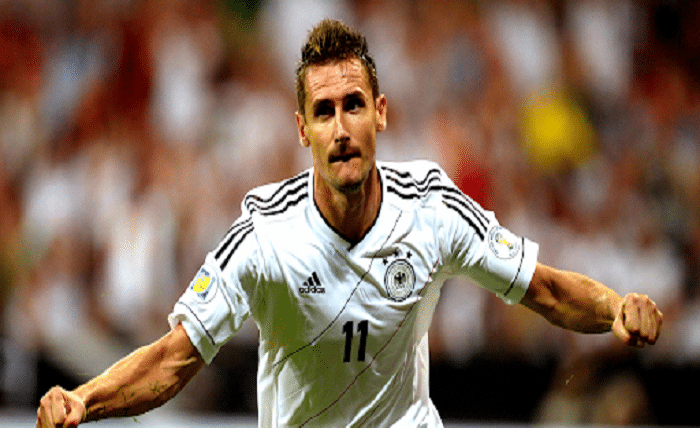
Miroslav Klose is one of the most remarkable strikers in international cakhia. Known for his exceptional heading ability, intelligent positioning, and consistent goalscoring, the German legend achieved something no other player has matched: scoring 16 goals across FIFA World Cup tournaments. His journey from a modest upbringing to becoming a world champion demonstrates the value of determination, discipline, and teamwork.
Early Life and Football Beginnings
Childhood and Family Background
Miroslav Josef Klose was born on June 9, 1978, in lịch thi đấu bóng đá đức, Poland, to a family of German heritage. His father was a professional footballer, while his mother represented Poland in handball.
Klose moved to Germany with his family during childhood. Adjusting to a new language and environment presented challenges, but football helped him develop confidence.
Unlike many famous players, Klose did not immediately enter an elite professional academy.
Beginning His Football Journey
Klose played amateur football for SG Blaubach-Diedelkopf before joining FC 08 Homburg.
He gradually improved his finishing, aerial technique, and movement inside the penalty area.
His performances eventually attracted attention from Kaiserslautern, opening the door to Bundesliga football.
Professional Breakthrough at Kaiserslautern
Klose joined Kaiserslautern in 1999 and made his Bundesliga debut in 2000.
His ability to score headers and find space inside crowded penalty areas quickly impressed supporters.
During the following seasons, he developed into a reliable striker and earned recognition from Germany’s national team.
His success demonstrated that players could reach the highest level without following a traditional academy pathway.
Becoming a Bundesliga Star
Success at Werder Bremen
In 2004, Klose transferred to Werder Bremen.
His attacking partnership with teammates helped Bremen compete among Germany’s strongest clubs.
During the 2005/2006 Bundesliga season, he scored 25 league goals and finished as the competition’s leading goalscorer.
His performances established him among Europe’s most effective center-forwards.
Joining Bayern Munich
Klose signed for Bayern Munich in 2007.
He contributed to two Bundesliga championships and two DFB-Pokal victories.
His experience and intelligent movement made him valuable in important matches.
Bayern also reached the 2010 UEFA Champions League final, although the team lost to Inter Milan.
International Career With Germany
World Cup Breakthrough in 2002
Klose made his senior international debut for Germany in 2001.
At the 2002 FIFA World Cup, he scored five goals, all with his head.
His performances helped Germany reach the final against Brazil.
Although Germany finished second, Klose established himself as an international goalscoring threat.
Winning the 2006 Golden Boot
During the 2006 World Cup hosted by Germany, Klose scored another five goals.
He received the Golden Boot as the tournament’s leading goalscorer.
Germany finished third, while Klose earned widespread recognition for his finishing and teamwork.
Breaking the World Cup Goalscoring Record
Klose continued representing Germany at the 2010 and 2014 World Cups.
In 2014, he scored against Ghana and Brazil, taking his World Cup total to 16 goals.
This achievement surpassed Ronaldo Nazário’s previous record of 15.
Germany defeated Argentina in the final, allowing Klose to celebrate his first World Cup championship.
Later Career at Lazio
In 2011, Klose joined Italian club Lazio.
Despite entering the later stages of his career, he continued scoring important goals in Serie A.
He helped Lazio win the Coppa Italia in 2013.
His professionalism and physical preparation allowed him to remain competitive into his late thirties.
Klose retired from professional football in 2016.
Miroslav Klose’s Playing Style
Klose was particularly admired for his outstanding aerial ability and precise positioning.
Rather than relying on spectacular dribbling, he anticipated defensive movements and attacked dangerous spaces.
His heading technique made him effective during crosses and set pieces.
He also possessed strong teamwork skills, frequently creating opportunities for other attackers.
His disciplined approach helped him perform consistently across different competitions.
Coaching Career and Football Legacy
Following retirement, Klose entered coaching and worked with Bayern Munich’s youth teams.
He later served as an assistant coach with Bayern’s senior squad before pursuing opportunities as a head coach.
His experience as a World Cup champion provided valuable knowledge for developing young players.
Conclusion
Miroslav Klose’s biography highlights an extraordinary journey from amateur football to international greatness. His achievements with Kaiserslautern, Werder Bremen, Bayern Munich, Lazio, and Germany demonstrate exceptional determination and professionalism. With 16 World Cup goals and a world championship title, Klose remains one of football’s most respected and successful international strikers.