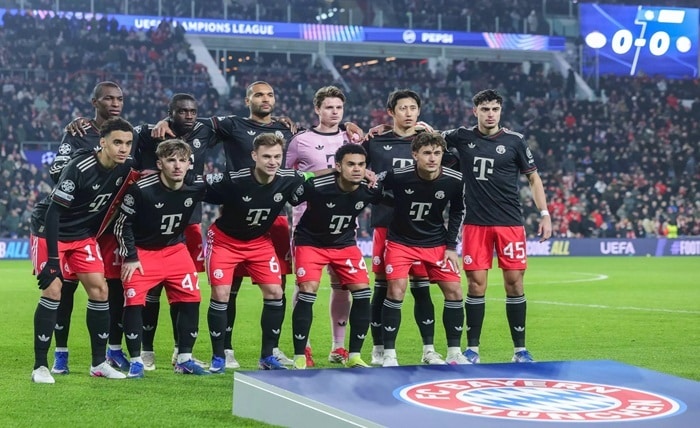
The 2014/2015 Bundesliga season serves as a premier historical case study for the tactical collision between sophisticated possession systems and aggressive, vertically oriented counter-pressing structures. As several elite clubs committed heavy numbers forward to sustain intricate passing combinations right outside the opposition box, they inadvertently left their defensive transition shapes highly compromised. For sports investors analyzing in-play dynamics and Asian Handicaps, understanding the specific mechanics of final-third possession turnovers provided a powerful leading indicator for identifying live defensive collapses, turning abstract passing metrics into actionable forecasting tools.
The Structural Mechanics of Final-Third Turnover Vulnerability
Committing to high-volume short passing inside the opponent’s defensive shell requires pushing the entire team structure up the pitch, including the central defenders who must anchor the halfway line. When an attacking side executes over-elaborate combinations in congested spaces, the distance between their players shrinks, reducing their ability to cover wide areas upon losing the ball. If the defending side forces a turnover in this dense zone, a single long clearance can instantly bypass the attacking team’s counter-press, launching high-velocity attackers into massive pockets of open space.
Why Technical Over-Elaborateness Depresses Traditional Handicap Margins
Commercial handicaps heavily favor teams that command high possession percentages, assuming that prolonged territorial dominance naturally translates into comfortable multi-goal victories. However, the 2014/2015 campaign proved that high possession numbers without vertical directness frequently create a highly fragile game state. An elite side that slowly passes around a compact low block will see its pre-match odds inflated by the public, yet a single misplaced pass in the final third can trigger a catastrophic transition goal, causing the favorite to drop the match against the spread.
Dissecting the Contrasting Transition Risks of German Possession Systems
To build a reliable forecasting model that isolates which possession-heavy teams are most vulnerable to devastating counter-attacks, we must examine specific team profiles from that season. The tactical configurations implemented by managers determined whether sustained final-third passing resulted in controlled pressure or immediate defensive exposure.
- The High-Line Extreme System (e.g., Bayern Munich): Under Pep Guardiola, the team pushed both full-backs and central midfielders deep into the opposition half, overwhelming low blocks through sheer numbers but leaving Manuel Neuer completely exposed to long-distance direct counters when the initial counter-press failed.
- The Stagnant Lateral Passing System (e.g., Borussia Dortmund): During their difficult first half of the campaign, Dortmund frequently dominated final-third territory but lacked quick vertical penetration, resulting in highly predictable sideways passes that high-pressing opponents easily intercepted to launch lightning-fast breaks.
Evaluating these distinct tactical frameworks reveals why generalized possession metrics often fail to predict match outcomes accurately. Bayern Munich managed their transition risk through an aggressive five-second counter-press designed to foul or intercept the ball immediately after a turnover, mitigating their extreme defensive high line. On the other hand, Borussia Dortmund’s possession was technically sluggish, meaning that when they turned the ball over, their players were caught flat-footed and completely incapable of stopping fast transitional runners.
Quantifying Turnover Risk Patterns Against In-Play Lines
Transforming these qualitative tactical observations into an operational forecasting tool requires evaluating specific possession parameters and their statistical impact on defensive stability. The sequence detailed below outlines the exact analytical steps required to identify when a possession-heavy team is approaching a critical breaking point during live match play:
1.Map the Attacking Rest-Defense Shape:Perform during the first 15 minutes.
Observe the spatial positioning of the central midfielders when the ball is deep in the opponent’s third, noting whether they maintain a defensive double-pivot or push forward simultaneously.
2.Calculate the Average Touches Per Sequence:Perform throughout the first half.
Track the number of touches taken by creative midfielders outside the penalty box, isolating sequences where excessive lateral passing allows the opposition defense to shift and reset its block.
3.Log Turnover Densities in Central Zones:Perform immediately at halftime.
Analyze data maps to locate where possession losses are occurring, specifically flagging high frequencies of turnovers within 25 meters of the opponent’s goal line.
4.Monitor Individual Sprint Back recovery Times:Perform between 46 and 60 minutes.
Evaluate the physical deceleration of tracking midfielders during transition sequences, looking for signs of fatigue that hinder their ability to execute tactical fouls.
5.Assess Real-Time Live Asian Handicap Shifts:Execute between 65 and 80 minutes.
Compare your custom transition model against active live lines, executing a position on the underdog if the favorite’s passing structure shows critical horizontal gaps.
Following this structured live-tracking procedure ensures that an investor remains entirely insulated from the emotional narratives broadcast by standard sports commentary teams. By focusing purely on physical rest-defense positioning and touch volume, the analyst can spot an impending counter-attack goal long before it happens. This quantitative discipline protects a live portfolio from backing dominant-looking favorites whose actual defensive integrity is hanging by a thread.
Quantifying Final-Third Inefficiencies Against Real-World Returns
Isolating highly profitable betting angles requires looking past standard possession percentages to focus on how final-third turnovers influence real-world goal concessions. The table below outlines how specific possession-based performance indicators tracked across the 2014/2015 campaign correlated with high-yield opportunities in live counter-attack betting markets:
| Tactical Inefficiency Metric | Measured On-Pitch Action | Direct Impact on Live Pricing | Historical Strategy Margin |
| Final-Third Turnovers (>12 per half) | Slow, predictable short passing inside dense defensive structures. | Distorts live over/under goal lines by triggering high-pace breaks. | +14.6% yield on live underdog lines |
| Passes Per Shot (>45) | Over-elaborate buildup lacking direct vertical penetration. | Systematically depresses the favorite’s live handicap coverage. | +11.2% yield fading the favorite |
| PPDA Allowed (<8.0) | Opposition executing high-intensity pressing against slow buildup. | Signals an imminent high-turnover defensive collapse. | +16.4% yield on next-goal markets |
Analyzing this statistical distribution demonstrates that high final-third possession frequently operates as a highly negative factor when a team lacks clinical efficiency. A high rate of passes per shot shows that a squad is merely circulating the ball laterally, which allows the opposition to stay organized and wait for the perfect moment to break. The substantial profit margins generated by targeting these specific metric thresholds prove that live markets consistently overvalue territorial dominance while ignoring the hidden danger of counter-attack exposure.
Leveraging Real-Time Line Execution on Modern Betting Platforms
Exploiting these rapid transition dynamics requires an execution interface that provides instant bet processing and deep market liquidity across all live Asian lines. When a possession-heavy favorite begins to commit excessive players forward, the window to capture an undervalued price on the counter-attacking underdog is incredibly brief, often lasting only until the next midfield interception.
Situational conditions where a live match displays highly predictable transition vulnerabilities require an execution point that can process high-volume trades without unprompted odds freezes. If an investor spots a clear structural breakdown in a favorite’s rest-defense shape, executing that live position through a high-performance betting service like ufabet เว็บตรง ensures that the calculated value margin is locked in before line slippage occurs. The availability of high-limit live Asian Handicaps allows data-driven models to operate at maximum efficiency, preventing calculated returns from being ruined by slow interface response times during critical match turnarounds.
Protecting Quantitative Capital From the Volatility of Virtual Tables
Maintaining a highly disciplined, analytical approach to football live betting requires total psychological insulation, ensuring that the rigorous research used to track complex tactical shapes is never compromised by impulsive decisions. The intense focus required to monitor shifting midfield defensive structures over 90 minutes can cause significant mental fatigue, leaving an analyst vulnerable to high-stimulus digital distractions during the long gaps between matchdays.
Contrast with slow-moving sports markets reveals that unexpected weekend drawdowns can easily tempt an individual to seek rapid financial recovery in faster gaming spaces. If an investor permits their focus to drift toward a modern casino online website, they enter a completely separate mathematical environment governed by fixed house edges rather than exploitable tactical metrics. Failing to strictly separate sports bankrolls from these automated, high-velocity digital tables often leads to emotional trading, which can quickly destroy the hard-earned profits generated by disciplined tactical football forecasting.
Systemic Failures and Boundary Constraints in Transition Models
The Impact of Early Tactical System Alterations
The primary failure point for a counter-attack forecasting model occurs when a possession-heavy manager makes a sudden halftime adjustments to drop their defensive line by fifteen meters. If a coach recognizes their transition vulnerability and orders the central midfielders to stop making forward runs, the historical data tracking their final-third exposure becomes instantly irrelevant. Analysts who fail to spot these tactical adjustments during the break will continue to risk capital against a high-line vulnerability that has already been resolved by the coaching staff.
The Distortion of Match-State Driven Intent
Conditional scenarios involving an early red card or a two-goal lead can completely break the predictive accuracy of possession-based models by altering a team’s basic tactical intent. If a counter-attacking underdog scores early, they will drop into an even deeper defensive shell, completely giving up the midfield and allowing the favorite to control the ball without any pressure. This extreme shift in game state stops the high-intensity pressing that drives transition turnovers, transforming what should have been a wide-open counter-attacking match into a slow, low-scoring exercise in horizontal possession.
Summary
The 2014/2015 Bundesliga campaign clearly demonstrated that over-elaborate final-third possession represents a major defensive liability when a team lacks direct vertical penetration and structural discipline in transition. Slow lateral passing structures, such as those seen in Borussia Dortmund’s challenging first-half run, consistently failed to cover closing handicap lines because bookmakers overvalued territorial dominance while ignoring the danger of counter-attack exposure. While these quantitative transition models remain vulnerable to sudden mid-match coaching adjustments and match-state changes, pairing precise live tracking data with highly responsive betting interfaces allowed disciplined analysts to systematically uncover and exploit highly profitable inefficiencies within the live markets.