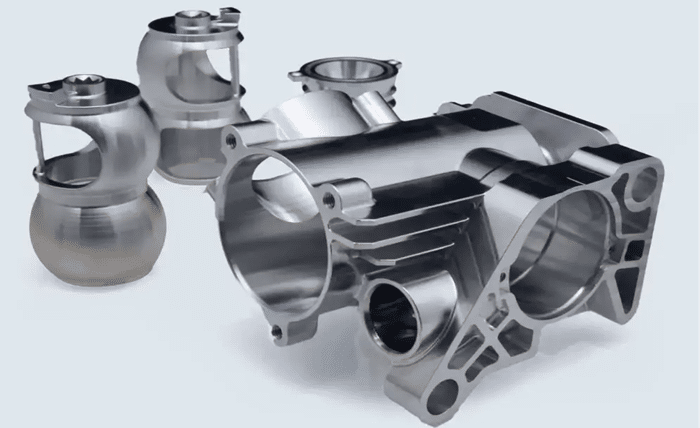
Prototyping is a crucial part of the product development process, especially when the design needs to have specific dimensions, lightweight structures, and reliable material properties. But the MOQ can lead to unnecessary purchasing commitments in the early development. CNC machining is a viable alternative, as it enables manufacturers to create single parts straight from a digital design. Flexible production quantities allow engineers to test geometry, assembly compatibility, and functionality before moving into bigger production runs.
Understanding the Importance of Single-Unit Aluminum Prototyping
Product development is not often a need for hundreds of the same parts. The first step for the engineers is to get physical samples to check dimensions, mechanical properties, and design limitations. Individual prototypes can be ordered to allow this evaluation to be made without the need to buy unwanted stock. This is possible with CNC machining as components can be produced from single CAD files during automated cutting processes.
CNC machining can be used for small production volumes as it can be programmed and does not require investment in special tooling like manufacturing processes do. Manufacturers can make one workpiece, set up the machining parameters, and obtain the required geometry. This versatility allows for easier prototyping of specialized equipment, replacement parts, and experimental product designs.
How No-MOQ Manufacturing Supports Aluminum CNC Machining Parts
MOQs can be an irritating situation if the engineers want just one component to test a design. With this limitation lifted, businesses can order aluminum CNC machining parts as needed for their projects. They can order one prototype rather than buying an entire production run, and test the prototype to see if it will work before giving the go-ahead to production.
This setup also allows for easier design changes. The first machined part can be checked by engineers, and any dimensional differences noted can be adjusted to the CAD model if needed. The new design is then ready to be produced as another separate part. This versatility minimizes waste and helps manage the costs of development, especially in cases where projects require multiple engineering changes.
Selecting Aluminum Alloys for Individual Prototypes
The choice of material can have a significant impact on the performance of the machining process, the strength of the resulting components, their resistance to corrosion, and their suitability for the intended application. Aluminium has a number of useful properties: it is relatively light, possesses high thermal conductivity, high electrical conductivity, and is easy to machine. But various alloys offer various mechanical and physical properties.
Common options include:
-
Aluminum 6061: A general-purpose, easily machineable alloy for structural parts, enclosures for electronics, brackets, and general engineering uses.
-
Aluminium 7075: A high-strength alloy commonly used for aerospace parts, high-strength mechanical applications, and specialised tooling.
-
Aluminium 5052: Provides good corrosion resistance and is used for marine parts, panels and equipment that are subject to moisture.
-
Aluminium 2024: Offers a good strength/weight ratio and fatigue resistance for specific aerospace and transportation uses.
-
Aluminium 6063: Commonly employed in architecture and for profiles, frames and other uses that demand a pretty surface appearance.
The selection of a grade depends on the operating conditions, mechanical loading, machining requirements, and finishing specifications.
CNC Machining Capabilities for Complex Prototype Geometries
Single-unit production does not always refer to the manufacture of simple components. These modern CNC machines are able to produce complex surfaces, recessed features, holes, and other parts that are precisely positioned from solid aluminum material. There are three-, four-, and five-axis machining configurations that manufacturers may choose from, based on geometric needs.
High-speed spindles enable high material removal rates, and smaller cutting tools are used for fine detail and narrow features. The choice of tool, cutting parameters, workholding, and machining sequence all affect the outcome. Five-axis machining allows for the processing of multiple surfaces with fewer setups, especially for parts with angled features or complex shapes.
Manufacturers like 3ERP have access to cutting-edge manufacturing machines and the expertise of engineers to meet varying prototype needs. They are able to manufacture single aluminum parts as well as larger quantities of parts.
Dimensional Accuracy and Quality Control During Prototype Production
The prototype should be sufficiently close to the engineering dimensions to be evaluated. There are several factors affecting manufacturing accuracy, such as the condition of the machine, cutting tool, material stability, workholding, and measurement procedure.
Tolerances should be set as per the functional significance of the feature and not unnecessarily restrict the component. For instance, mating surfaces, bearing locations, and alignment holes may have tighter dimensional tolerances than nonfunctional exterior surfaces.
Precision inspection equipment such as coordinate measuring machines (CMMs) can be used to check important dimensions against engineering drawings. Edge-finding equipment and dimensional measurement instruments may also be used in manufacturing and final inspection. Depending on geometry, material, and inspection requirements, tolerances of up to ±0.01 mm are achievable with capable processes.
Surface Finishing Options for Custom Aluminum Prototypes
While the geometry of the component is determined by the machining, the additional characteristics of the appearance, corrosion resistance, surface durability, etc. are determined by the surface treatment. The type of finish chosen will be dependent on the environment and the functional requirements of the prototype.
Common finishing options include:
-
Anodizing: Creates a controlled oxide layer that improves corrosion resistance and can provide different surface colors.
-
Bead blasting: Produces a more uniform matte appearance by treating the surface with abrasive media.
-
Polishing: Reduces visible machining marks and creates a smoother, more reflective surface.
-
Brushing: Introduces directional surface patterns for a consistent metallic appearance.
-
Powder coating: Applies a protective decorative coating suitable for selected aluminum components.
Not every finish is appropriate for every application. Engineers should consider dimensional changes, coating thickness, electrical contact requirements, and surface specifications before selecting a treatment.
Managing Prototype Lead Times and Future Production Requirements
When each prototype is used for the development of the product, production scheduling plays a crucial role. Depending on the particular design, material availability, and machining and finishing operations, a simple aluminum piece can be produced in a few days. 3ERP claims to deliver some of its simple machined parts in as little as three days and has a fast lead time of five days.
The first step of a successful manufacturing process is sending CAD files and technical drawings. Engineers will check geometry, material selection, tolerances, and finishing requirements prior to a quotation. When the manufacturing process starts, the manufactured product is inspected and machined to determine if it meets the specification.
Following prototype validation, producers can additionally produce larger quantities. Aluminium extrusion, forging, and casting are all suitable options for the various production needs when combined with CNC machining for suitable designs. This enables the manufacturing approach to be adapted as the number of projects increases.
Conclusion
Aluminium prototype orders without minimum quantities give more flexibility during product development. Engineers can see physical components, check out key dimensions, test materials, and make tweaks to designs without going into mass production.
This is possible with CNC machining because it can be programmed to produce the desired parts, can be made of a variety of aluminum alloys, can be cut with precision, and can be treated with a variety of surface finishes. Additionally, when working with a manufacturing partner like 3ERP who has experience, you will also have access to engineering support, inspection capabilities, and scalable production services. Companies can make better manufacturing decisions and have greater control over development costs, quantities, and project timelines by beginning with a single prototype.